Engineering case study
DORA Engineering Transformation
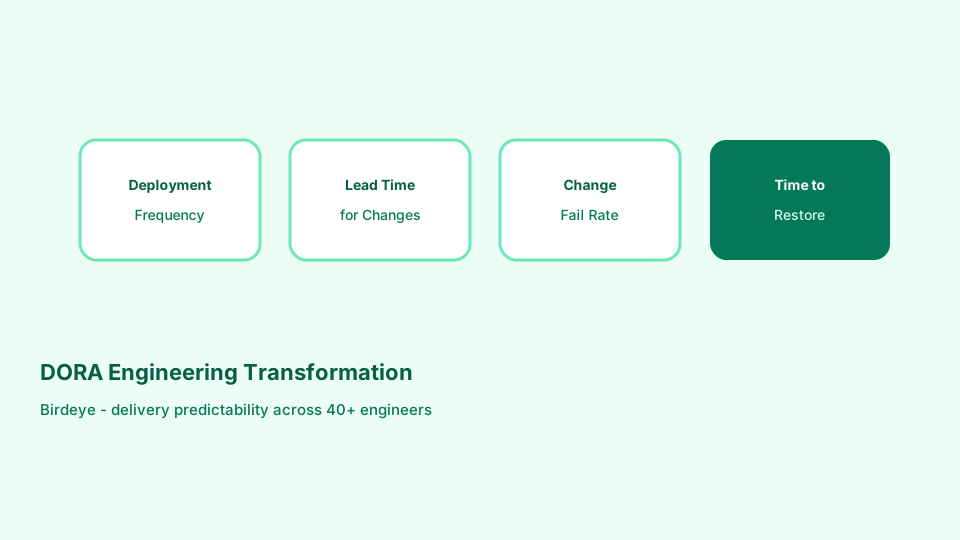
As Engineering Director, I introduced DORA metrics across Birdeye engineering—not as a dashboard project, but as an operating change: making deployment frequency, lead time, change fail rate, and time-to-restore visible so we could improve delivery predictability, not guess at it.
Organizational change through measurement—how DORA shifted Birdeye engineering from opinion-driven delivery to continuous improvement at 40+ people.
“You can’t improve delivery predictability if the organization can’t see it.”
Why the business funded this
Birdeye’s engineering org scaled while shipping enterprise SaaS contributing to $100M+ ARR. Without shared delivery signals, bottlenecks stayed anecdotal and process debates stayed opinion-based. Predictable delivery became a business requirement—and an organizational change problem, not a tooling problem.
My role
Engineering Director
Team
40+ engineers
Duration
Ongoing operating system
Business goal
Predictable delivery at scale
Primary outcome
DORA-driven engineering operating system
My contribution
Leadership · Measurement · Organizational change
Responsible for
- Delivery metrics strategy
- Engineering excellence
- Process improvement
- Manager alignment
- Stakeholder communication
- Bottleneck removal
40+
Engineers enabled
DORA
Operating system
Measured
Delivery health
$100M+
ARR context
Engineering timeline
- Delivery unpredictability
- Introduce DORA signals
- Manager alignment
- Bottleneck removal
- Operating cadence
Business
Business impact
- Improved delivery predictability through shared DORA signals
- Made bottlenecks visible across product teams
- Shifted excellence conversations from opinion to evidence
- Supported scale of a 40+ engineer organization shipping enterprise SaaS
Why this problem mattered
As headcount and product surface area grew, “we feel slow” stopped being a useful diagnosis.
DORA gave the organization four signals—deployment frequency, lead time, change fail rate, time to restore—so we could find bottlenecks and improve delivery predictability while continuing to ship enterprise products.
Business context
This initiative is Birdeye’s engineering delivery operating system: DORA metrics as shared language for throughput and stability—used to improve how teams ship, recover, and plan.
Delivery
Constraints
- Must not create a blame culture around metrics
- Signals must be trusted by managers and ICs
- Improvements must coexist with feature delivery pressure
- Prefer actionable metrics over vanity dashboards
Leadership
Cross-functional collaboration
DORA only works if engineering managers, ICs, and product partners share the same language for delivery health.
- Aligned engineering managers on what each DORA signal means operationally
- Partnered with product leadership on delivery predictability expectations
- Used metrics in planning conversations—not only in engineering rituals
- Focused on bottleneck removal, not individual scorekeeping
Judgment
Engineering principles applied
- Measure before optimizing
- Documents and signals over opinionated status meetings
- Improve systems, not scapegoat teams
- Evolutionary process change—small improvements compounded
Engineering goals
- Make delivery performance visible and comparable
- Improve predictability without sacrificing quality
- Remove systemic bottlenecks across teams
- Build a sustainable excellence cadence as the org scales
Delivery system view
DORA isn’t a product architecture—it’s the measurement architecture around how change flows from idea to production and back from failure.
Four signals create a shared model of delivery health. Leadership uses them to sequence improvements in CI/CD, review, ownership, and recovery.
- Change enters pipeline
- Lead time for changes
- Deployment frequency
- Change fail rate
- Time to restore
- Planning & bottleneck removal
Migration
Migration phases
Phase 1
Define signals
Agree what DORA means here.
Phase 2
Instrument
Make metrics trustworthy.
Phase 3
Socialize
Managers and teams share language.
Phase 4
Act
Remove bottlenecks that move the numbers.
Phase 5
Cadence
Review delivery health continuously.
Engineering
Key results
Judgment
What didn't work
Talking about “engineering excellence” without shared metrics
Problem
Debates stayed anecdotal; bottlenecks stayed invisible.
Decision
Introduce DORA as the common delivery language.
Moved to
Evidence-based improvement across teams.
Key engineering decisions
DORA as shared language—not a scoreboard
Problem
Metrics can create fear and gaming if used for blame.
Why
Psychological safety is required for honest delivery signals.
Trade-offs
Slower “accountability theater”; better real improvement.
Result
Teams discuss systems bottlenecks, not personal failure.
Act on bottlenecks, not decorate dashboards
Problem
Dashboards without decisions waste attention.
Why
Every signal review should change sequencing or ownership.
Trade-offs
More leadership time on delivery ops.
Result
Metrics drive process and architecture changes.
Challenges I had to solve
Challenge
Teams distrust metrics they didn’t help define.
Solution
Manager alignment and clear operational definitions.
Result
Signals become discussable instead of dismissible.
Challenge
Feature pressure crowds out excellence work.
Solution
Tie bottleneck removal to predictability stakeholders care about.
Result
Delivery health stays on the leadership agenda.
Delivery
Risk mitigation
| Risk | Mitigation |
|---|---|
| Blame culture | Blameless system focus |
| Vanity dashboards | Action-required reviews |
| Metric gaming | Manager interpretation norms |
Cultural risk
Frame DORA as learning about systems, not ranking people.
Noise risk
Prefer fewer trustworthy signals over many confusing ones.
Inaction risk
Convert reviews into bottleneck-removal work.
Organization
Engineering leadership
This is classic Director leverage: change how the org sees and improves delivery.
40+
Engineers
4 DORA
Signals
Ongoing
Cadence
“Metrics without psychological safety become theater.”
Manager alignment
Same definitions, same improvement conversations.
Stakeholder communication
Translate delivery health into business predictability.
Process & architecture
Use signals to prioritize bottleneck removal.
Culture
Protect blameless learning while raising the bar.
Outcomes
Business outcomes
Predictability
Clearer delivery expectations
Scale
Supports 40+ eng shipping enterprise SaaS
Engineering outcomes
Visibility
Shared DORA delivery signals
Action
Bottleneck-focused improvements
Team outcomes
Language
Common delivery vocabulary
Culture
Blameless improvement focus
Transformation
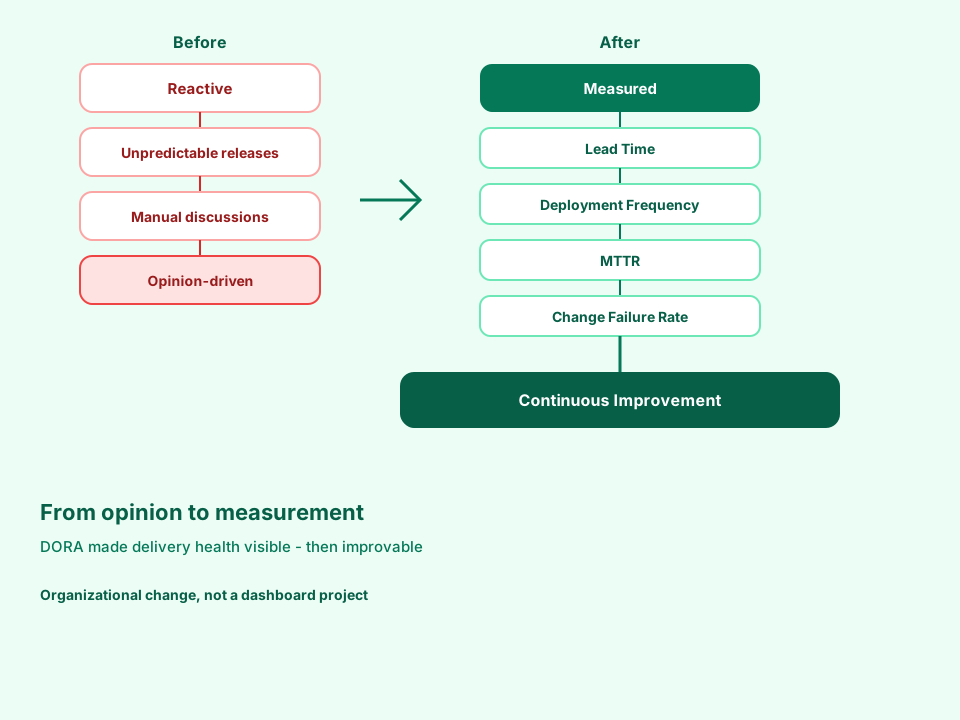
What changed
| Before | After |
|---|---|
| Anecdotal “we’re slow” | Shared DORA signals |
| Opinion-based process debates | Evidence-based bottlenecks |
| Excellence as slogan | Excellence as operating cadence |
Leadership lessons
- Measurement enables improvement—only if culture stays blameless.
- Four signals beat twenty ignored dashboards.
- Director work is making delivery health a leadership conversation.
What I'd do differently
- Publish a short DORA playbook for new managers earlier.
- Pair metrics reviews with explicit bottleneck owners from day one.
Where it goes next
Keep strengthening the delivery operating system:
- Tighter coupling of DORA reviews to planning
- Better instrumentation quality over time
- Team-level coaching on reading signals
- Connect delivery health to customer-facing release risk
Biggest takeaway
Engineering excellence scales when the organization can see delivery—
and feels safe enough to improve it.
Key takeaways
- DORA made delivery predictability a first-class leadership concern at Birdeye.
- The win is not the dashboard—it’s bottleneck removal with a shared language.
Final reflection
Introducing DORA wasn’t about copying a framework—it was about giving a scaling engineering organization eyesight. Once delivery was visible, improvement became a management system instead of a recurring argument.
← All projects